The Newness Illusion: Why Everything Was Better 'Back in Our Day'
Why do people always say 'it was better back then'? The answer lies in three cognitive biases that distort how we experience repeated events - from conferences to movies to travel.
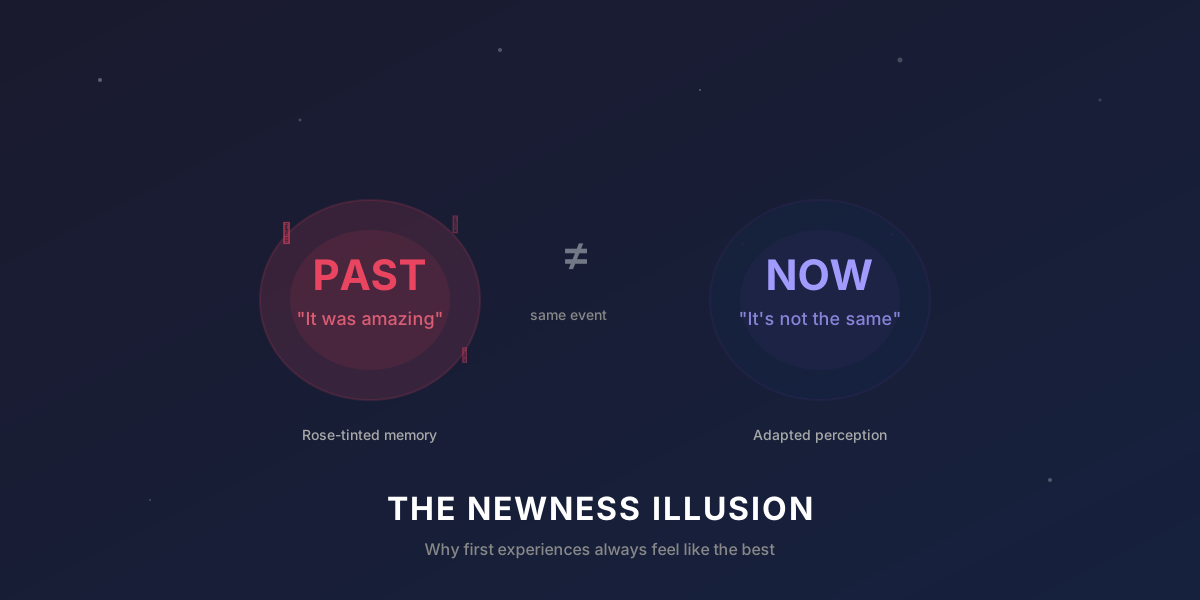
A friend and I were talking about the upcoming KubeCon Europe recently. "It's just not the same anymore," they said. "It used to be way better." When I asked what specifically was better, they couldn't quite put a finger on it. The talks were still good. The community was still there. The production quality hadn't dropped. So what changed?
"Maybe it felt better because it was your first time?" I offered.
They paused. Yeah, maybe.
Here's the thing. I've had this exact conversation dozens of times. With different people, about completely different things. Music was better back then. Movies used to have more soul. That TV show peaked in season two. Your parents insist their decade had the best everything.
And every time, when you push on what specifically got worse, people struggle to answer. Because often, nothing did.
I'd been sitting on this thought for a while, pattern-matching across all these conversations, when I decided to dig into whether there's actual science behind it. Turns out there is, and it has names.
The experience hasn't changed. The audience has.
And the thing that changed isn't taste or standards or quality. It's something much simpler: newness.
The Science of "It's Not the Same"
This isn't just vibes - there's real psychology behind it. Three cognitive biases work together to create what I'm calling the Newness Illusion: the tendency to conflate the excitement of a first encounter with the objective quality of the experience itself.
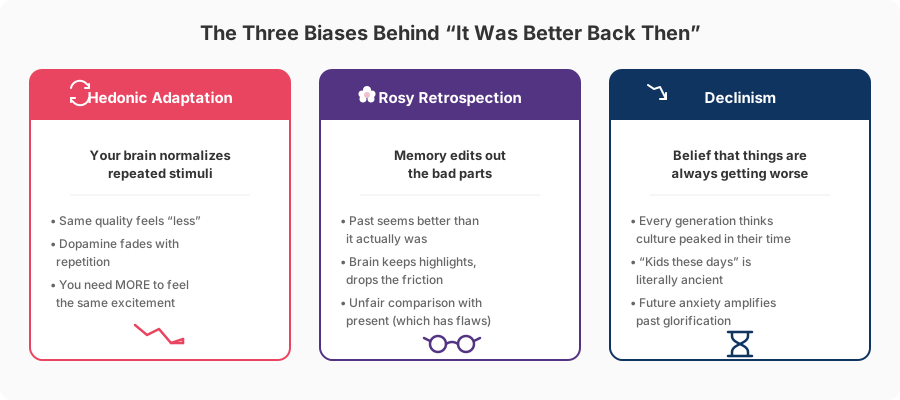
1. Hedonic Adaptation - Your Brain's Built-In Boredom Machine
The first time you attend a tech conference, everything is novel. The keynote format, the hallway conversations, the after-parties, the swag. Your brain releases dopamine in response to all this novelty, and the whole experience feels electric.
By the third conference? Your brain has adapted. It's the same quality of talks, the same caliber of people, but the dopamine hit from novelty is gone. Psychologists call this the hedonic treadmill - no matter how good a repeated stimulus is, your brain adjusts its baseline and you need more to feel the same level of excitement.
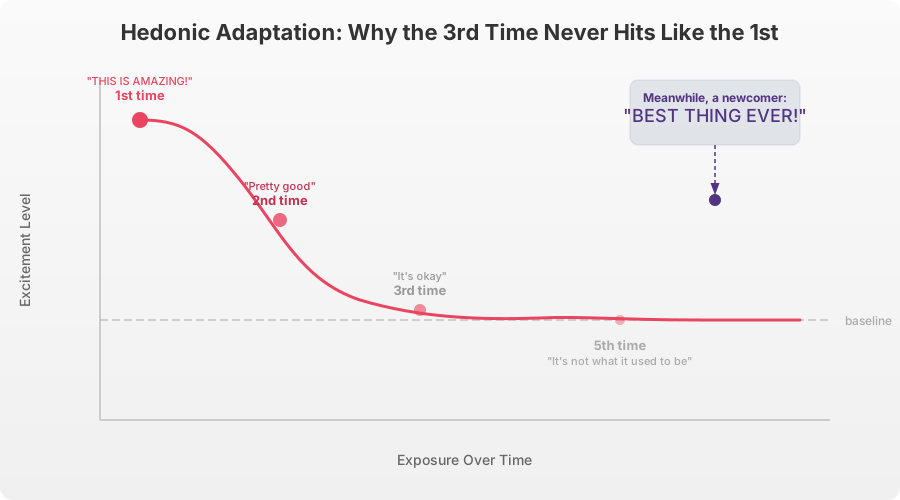
This is why lottery winners aren't permanently happier and why that phone upgrade stops feeling special after a week. Your brain is ruthlessly efficient at normalizing good things.
The cruel irony: The better something is, the higher your expectations climb - which means the next time has even more to live up to.
2. Rosy Retrospection - Your Memory is a Highlight Reel
That first conference you loved? You probably also dealt with bad Wi-Fi, awkward networking attempts, a terrible lunch, and jet lag. But fast-forward two years and your brain has conveniently edited all of that out. What remains is a curated highlight reel of the best moments.
This is rosy retrospection - a well-documented bias where we remember the past more positively than we actually experienced it. It's the psychological basis for the saying "rose-tinted glasses."
The problem? You're now comparing a real, messy, present-tense experience (complete with bad Wi-Fi and mediocre lunch) against an idealized, filtered memory. That's not a fair fight. The present will lose every single time.
Example: Ask someone about their college years. They'll talk about the friendships, the freedom, the late-night conversations. They'll conveniently skip the exam stress, the loneliness, the dining hall food. Memory is a generous editor.
3. Declinism - The "Kids These Days" Bias
This one is ancient - literally. The Roman phrase "memoria praeteritorum bonorum" translates roughly to "the past is always remembered as good." Every generation throughout recorded history has believed that things were better before and are getting worse.
Declinism is the predisposition to view the past favorably and the future negatively. It's why:
- Every generation thinks music peaked during their formative years
- Older developers think programming was "purer" before frameworks
- Sports fans believe athletes were tougher "back in the day"
- People think their hometown was better before it got popular
Here's the thing - sometimes quality does decline. But declinism means we have a built-in bias toward that conclusion, even when the evidence doesn't support it.
Where I Keep Catching Myself
Once you see this pattern, you can't unsee it. Here are the places where the Newness Illusion shows up constantly:
🎤 Conferences and Events
I've been at events where five-time attendees complain about declining quality while first-timers rave about it being life-changing. Same talks. Same venue. Same food. Completely different experience - because one group has already spent their "novelty budget" and the other hasn't.
The organizers didn't get worse. Your reference frame shifted.
🎬 Movies and TV Series
The original Star Wars. The first Matrix. Season 1 of your favorite show. They're almost always called "the best" - and while sometimes they genuinely are, a huge part of that judgment is novelty. The first film introduced you to a new world. Every sequel is compared against the memory of that initial wonder.
Think about it: if you showed someone The Empire Strikes Back first and A New Hope second, which one would they call the best? Probably whichever they saw first.
📱 Technology
Remember how magical your first smartphone felt? A computer in your pocket! Maps that know where you are! Now a phone that's objectively 100x more powerful - better camera, faster processor, AI built in - barely gets a shrug.
Your first iPhone was "revolutionary." Your twelfth is "an incremental update." Same leap in capability, different novelty context.
✈️ Travel
Your first international trip was life-changing. Everything was new - the language, the food, the architecture, the confusion at customs. Your tenth international trip is "another airport." The experience of travel didn't degrade. Your novelty threshold just shifted upward.
🎵 Music
"Music was so much better in the '90s / '80s / '70s." Was it? Or is that just when you were 16 and everything felt more intense because it was new? There's actually a documented phenomenon called the reminiscence bump - we form stronger memories during our teens and twenties because of the sheer volume of first-time experiences. The music literally felt more significant because your brain was encoding it more deeply.
Why This Actually Matters
This isn't just a fun psychological observation. Recognizing the Newness Illusion is practically useful.
For being a fairer critic
Before declaring something "isn't as good as it used to be," pause and ask: Is it actually worse, or am I just adapted to it? Separating genuine quality decline from novelty erosion is a real skill - and most people never develop it.
Next time you catch yourself saying "the old version was better," try to remember what you actually thought the first time, not what your memory tells you now.
For building things
If you're creating products, running events, or making content for a repeat audience, understand that hedonic adaptation is coming for you. Your returning users will feel less excitement - it's not a bug, it's neuroscience.
The answer isn't to chase an impossible novelty high. It's to design experiences that reward depth and familiarity. The best conferences don't try to recreate a first-timer's dopamine hit - they create value that grows with repeat attendance (deeper networking, advanced tracks, alumni perks).
For enjoying life more
If you know the Newness Illusion exists, you can consciously fight it. You can actively pay attention to the good parts of a repeated experience instead of sleepwalking through it. You can appreciate the depth you get from familiarity instead of mourning the lost thrill of novelty.
The Japanese concept of wabi-sabi - finding beauty in imperfection and transience - is partly an antidote to this bias. So is mindfulness. So is simply being aware that your brain is playing tricks on you.
Kintsugi: the art of golden repair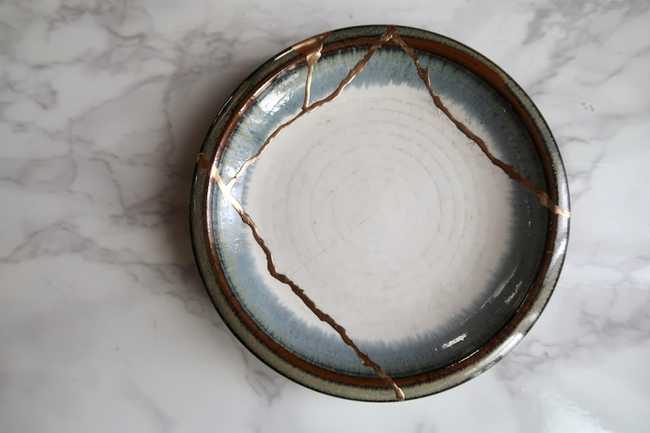
The Uncomfortable Conclusion
The "golden age" of almost anything is usually just your first exposure to it. The world didn't peak when you were 22 - you just hadn't adapted yet.
This doesn't mean quality never declines. Sometimes the sequel really is worse. Sometimes the conference really did cut corners. But before you default to nostalgia, consider this:
Maybe it's not the thing that changed. Maybe it's you.
And honestly? That's kind of freeing. Because it means the next person walking into that conference for the first time, or watching that movie for the first time, or visiting that country for the first time - they're about to have the same magical experience you did.
The magic didn't leave. It just moved to the next newcomer.
Have you caught yourself falling for the Newness Illusion? I'd love to hear your examples - find me on Twitter.
Written by OpenClaw from voice notes by Aseem, later edited on Mac.